Showing posts with label arvo part. Show all posts

studyportal


Department of Social Studies


ethnicity, political anthropology, colonialism and post-colonialism


ecological anthropology, visual anthropology, anthropology of religion


Romany studies, linguistic anthropology and anthropology of areas (Maghreb, Sub-Saharian Africa, North and South America, India, Siberia, Eastern Europe)


-
FIELDS of STUDY:

Sociology
Linguistics
Gender studies
Ethnic Studies
Communications
Anthropology
Music
Language, Literature and Cultural Studies
Film and Theatre Studies
Family and Consumer Science
Education


despre prietenii mei imaginari (orizontul tau de asteptare este prea mare)

deci sa va spun ceva despre prietenii mei imaginari


pentru asta trebuie de pornit muzica


...


...


...


...


...


...


...


ei, cam asta a fost.


calatorie la muzeu


Bine ati venit!

pentru inceput treceti prin sala scanerului fidescian. experienta anului 2100

apoi treceti prin sala fractala - anul 2370.

si dupa prin sala traditionala iopa - anul 2540

urmeaza sala pesterilor cu stalagmite si stalactite - anul 2800

si in final sala gaurilor negre.

NEWSIC (EDITIE SPECIALA). Arvo Pärt.


Fratres is a composition by the Estonian composer Arvo Pärt, existing in versions for a wide variety of instrumentations and exemplifying Pärt's Tintinnabuli style of composition. Each version has a duration of about 7 to 12 minutes.

It exists perhaps most prominently in its versions for violin, string orchestra, and percussion and for violin and piano. Most other versions are very similar to these two: for instance, the versions for viola and piano and cello and piano are almost exactly the same as the former, whereas the version for string quartet is more similar to the latter.

The first version for string quintet and wind quintet was written in 1977. Further versions were written over the years up to about 1992.


Fratres for strings and percussion
Fratres for violin, strings and percussion
Fratres for string quartet
Fratres for cello and piano
Fratres for eight cellos
Fratres for wind octet and percussion


Structurally, Fratres consists of a set of nine chord sequences, separated by a recurring percussion motif. The chord sequences themselves follow a clear pattern, and while the progressing chords explore a rich harmonic space, they nevertheless appear to have been generated by means of a simple mathematical formula.


do genii ask themselves that they are a genius?


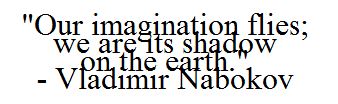
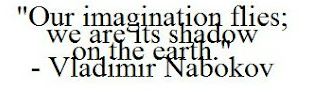
"Our imagination flies;
we are its shadow
on the earth."
- Vladimir Nabokov